Welcome to History for kids at Super Brainy Beans.
We bring you the best of the internet all in one place. A simple guide to History for Primary School learning EYFS, KS1 & KS2. With links, games, videos and books to support your learning and interactive quizzes, we make sure learning is always fun.
Welcome to History for kids at Super Brainy Beans.
We bring you the best of the internet all in one place. A simple guide to History for Primary School learning EYFS, KS1 & KS2. With links, games, videos and books to support your learning and interactive quizzes, we make sure learning is always fun.
Subjects
Timeline of history
History is a huge story that stretches back millions of years, so we use timelines to help us see when important events happened. Because some parts of history are much older than others, we need different scales to show time clearly. That’s why there are three timelines here — each one focuses on a different part of history and zooms in closer as we get nearer to today.
What do BC and AD mean?
- BC means “Before Christ.” These dates count backwards, so 500 BC is earlier than 100 BC.
- AD means “Anno Domini,” which is Latin for “in the year of our Lord.” These dates count forwards, starting from the year 0.
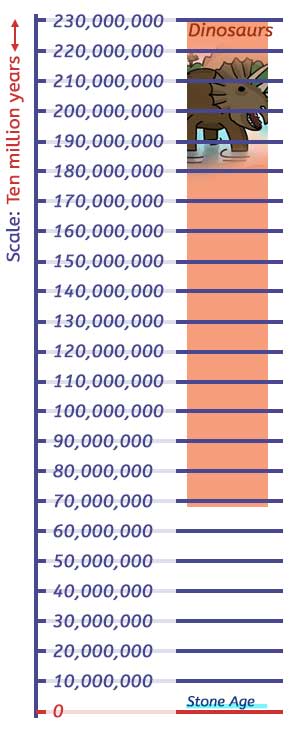
Dinosaurs to humans
This timeline shows very ancient history, stretching from the time of the dinosaurs (over 200 million years ago) up to the moment when humans first appeared. Because these dates are so huge, the scale increases in steps of ten million years.
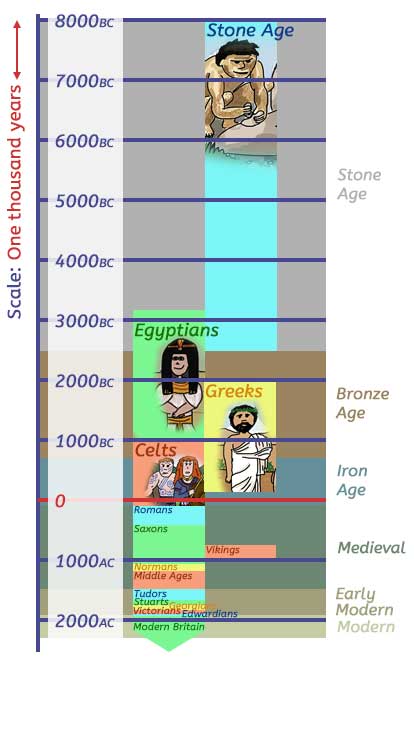
Stone Age to modern day
This middle timeline zooms in closer, covering the last 10,000 years of human history.
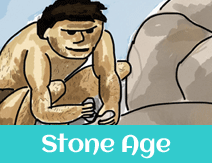
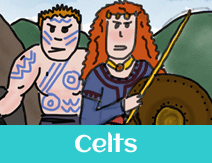
It begins in the Stone Age and moves through the Bronze Age, Iron Age, and all the way to the present day. The scale increases in steps of one thousand years.
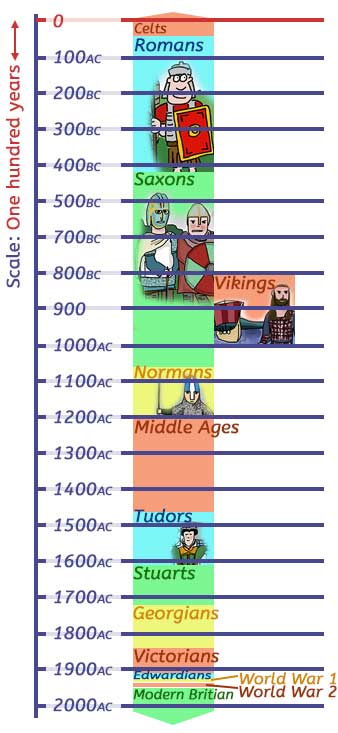
Romans to today
The third timeline zooms in even further. It shows what happened from the time of the Romans to modern Britain. Because this part of history is much closer together, the timeline uses steps of one hundred years.
Parents’ guide to supporting your child with history
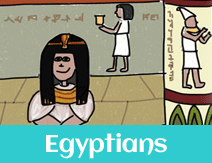
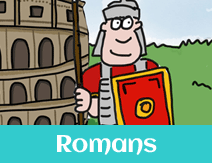
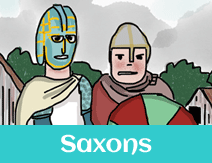
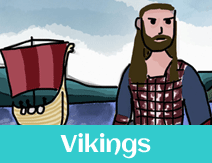
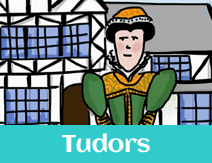
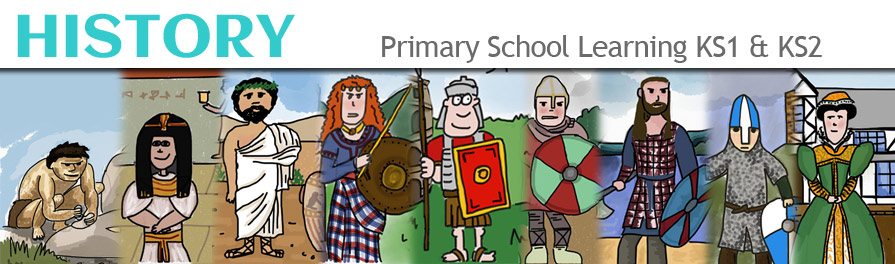
In primary school, children explore exciting stories from the past rather than just memorising dates. The curriculum includes the Stone Age, Bronze Age and Iron Age, as well as ancient civilisations such as the Egyptians and Greeks. Children also learn about major periods in British history, including the Romans, Anglo-Saxons, Vikings, Normans, Tudors, Victorians, and important modern events such as World War I and World War II.
Schools may choose different topics, but all children get a clear journey from prehistoric times to modern Britain.
How Can Parents Help at Home?
You don’t need to be a history expert! Simply talking about the past can help your child make connections. Children love hearing how things were different when you were young, looking at old photos, or exploring family belongings. Visiting local castles or museums is a great way to bring learning to life (and many are free).
Watching history programmes, reading story books set in the past, and looking at timelines all encourage curiosity. Asking questions like “How do we know this happened?” helps children think like young historians.
How Super Brainy Beans can help?
Super Brainy Beans is designed to support both children and parents. Every topic is explained in clear, child-friendly language, with bright illustrations, timelines and interesting facts (including the gross and shocking bits children love!)
It can be used for homework, projects, or simply exploring a period your child finds fascinating. We are constantly updating our history pages, so come back for more help or sign up to our newsletter for our latest updates.