Anglo Saxons

Anglo Saxon

Anglo Saxons for kids

Anglo Saxons for kids learning KS2 at Primary School. Homework help with Saxon life and Alfred the Great.

Time: 500AD - 1100AD

Who were the Anglo Saxons?

The Anglo Saxons were groups of people who came to Britain around 1,500 years ago, after the Romans left. They were not one single group but three main tribes: the Angles, the Saxons, and the Jutes.

The Anglo Saxons originally lived across the North Sea in parts of northern Europe. They came from areas that today are Germany, Denmark and the Netherlands. Life in these places could be tough. There were floods, storms and not enough good farmland for everyone to grow crops or keep animals.

Because of this, many families decided to leave. They packed their tools, food and belongings into long wooden boats and sailed across the sea to Britain. Some came as settlers looking for better land, while others came as warriors hoping to take new territory.

The Anglo Saxons began arriving around AD 450, just after the Romans left. At first they came as small groups looking for better land, but soon many more arrived and took over large areas. Their time in Britain lasted for more than 600 years, until the Normans arrived in 1066.

When the Anglo Saxons arrived, they settled mostly in the east and south of Britain, where the land was flatter and easier to farm. Small villages began to grow, and slowly these groups formed the Anglo Saxon kingdoms that shaped early England. They built small wooden villages that later grew into towns. Over time, they became the most powerful people in the country.

Britain was divided into seven main Anglo Saxon kingdoms, each ruled by its own warrior king. These kings protected their people, fought battles and tried to gain more land.

The Anglo Saxons didn’t just bring new people—they also brought new languages, new customs and a new way of life that helped shape the Britain we know today.
The name England actually comes from “Angle-land,” meaning land of the Angles.
BBC Bitesize - SaxonsBBC Bitesize - Anglo-Saxons
Cartoons explaining the History of the Anglo-Saxons and when they came to Britain.

Anglo Saxon villages and homes

Most Anglo Saxon families lived in small villages with only a few dozen people. The homes were made from wooden planks, with thatched roofs made from straw or reeds. They were simple but strong and could be built quite quickly.

Inside, an Anglo Saxon house usually had one main room. In the centre was a fire, used for cooking meals and keeping warm on cold nights. There were no chimneys, so the smoke drifted around the room before escaping through holes in the roof. This made the inside of the house dark and smoky.

The floors were often made of packed earth or mud, and there was very little furniture. People sat on wooden benches and slept on straw mattresses placed on the floor. Most families cooked, slept and worked all in the same room.

Villages were surrounded by fields where crops such as wheat and barley were grown. There were also animal pens for pigs, cows, chickens and sheep, which were important for food, wool and milk.

Anglo Saxon houses often had mud floors and in winter, small animals sometimes slept inside the house with the family to help keep everyone warm.

What did the Anglo Saxons eat?

The Anglo Saxons had to grow, gather or hunt all their own food, so meals depended on the seasons and what people could find.

Most families ate bread made from wheat, rye or barley. They cooked it over a fire or baked it on hot stones. They also grew vegetables like leeks, onions, beans and cabbage, which they added to thick stews.

People gathered berries, nuts and herbs from the countryside and collected eggs from their chickens. Rivers and the sea provided fish, which was an important part of their diet, especially on days when they did not eat meat.

Meat was eaten less often because animals were valuable. When families did eat meat, it usually came from pigs, cows, goats or deer. To make it last through winter, they salted, smoked or dried it.

The Anglo Saxons did not have sugar, so their only sweetener was honey, which they used to make sweet cakes and drinks.

The Anglo Saxons made a drink called mead, which was created by mixing honey with water and leaving it to ferment. It was often served at feasts in the great hall!

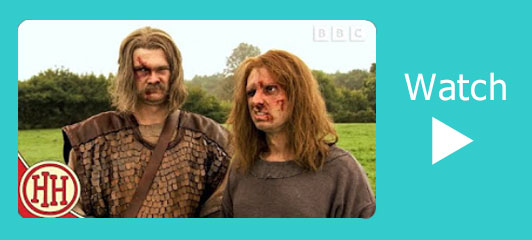
Smashing Saxons - Horrible Histories
Saxons video

Free online History games

Anglo Saxon clothes and appearance

Anglo Saxon clothes were simple but practical, designed to keep people warm in a cold, damp climate. Clothing was made from wool, linen and leather, and every family spun and dyed their own materials. Natural dyes from plants, berries and roots were used to create colours like red, yellow, green and blue.

Men wore long woollen tunics with trousers underneath. A thick cloak fastened with a metal brooch helped keep out the wind and rain.
Women wore ankle length dresses made of linen, with a woollen over dress or apron on top. They also used brooches to fasten their clothing.

Both men and women wore belts, which were useful for carrying everyday tools. It was common to carry a small knife, used for preparing food, cutting rope or carving wood.

The Anglo Saxons loved jewellery. Even ordinary people decorated themselves with colourful glass beads, bronze brooches and simple arm rings. Rich Anglo Saxons wore gold, silver or gemstones to show their wealth and status.

Hair was usually long. Men sometimes had moustaches, while women tied their hair with ribbons or wore simple head coverings.

Anglo Saxons cared about looking tidy. They used combs made of bone or antler, and some even carried tiny ear scoops and tweezers as part of their grooming kit.

Anglo Saxon jobs and daily life

Life in an Anglo Saxon village was busy. Almost everyone had an important job to help the community survive. Most people were farmers, and the whole family worked together to grow food and care for animals. Men ploughed the fields with oxen, planted seeds and repaired fences and buildings. They also hunted in the forests for deer, boar and birds.

Women were just as hardworking. They cooked over open fires, baked bread, milked cows, made butter and brewed ale. They spun wool into thread, dyed it with natural colours and wove it into cloth. Women also looked after children, tended vegetable gardens and kept the home running smoothly.

Children did not go to school like today. Instead, they learned skills from their parents. They fetched water from rivers or wells, collected firewood, scared birds away from crops and helped feed the animals. As they grew older, they learned the trade of their family.

Villages also relied on people with special skills.
There were blacksmiths who made tools, weapons and nails from iron.
Potters shaped clay into bowls, jugs and storage jars.
Carpenters built houses, carts and furniture.
Leather workers made shoes, belts and bags.
Weavers and spinners created cloth for clothing and blankets.

Everyone played a part, and daily life followed the seasons. Spring meant planting, summer was for harvesting, autumn was for preparing food for winter, and winter was the time for mending tools and telling stories around the fire.

Anglo Saxon farmers used long, curved wooden ploughs that were so heavy they needed several oxen to pull them across the fields.

Romans vs Anglo Saxons: What changed?

When the Romans left Britain around the year 410, everything began to change. The Romans had built large stone towns with tall buildings, busy markets, bathhouses, and straight roads. They had armies, laws and a well-organised government.

But the Anglo Saxons lived very differently.

They preferred small farming villages instead of big towns. Instead of stone houses, they built wooden homes with thatched roofs. Many Roman buildings were too large and too complicated to look after, so people stopped using them. Over time, the stone walls cracked, the roofs fell in and plants grew inside the old streets.

Daily life became simpler and more focused on farming. People spent their days growing food, looking after animals, making clothes and repairing tools instead of visiting Roman bathhouses or markets. Trade slowed down and many Roman skills like writing in Latin or building in stone were lost for many years.

Even the roads changed. Some Roman roads were still used, but many became overgrown and muddy because they were no longer repaired.

Some Roman towns were abandoned so completely that for hundreds of years nobody even remembered they were there. Today, archaeologists dig them up and uncover old streets, mosaics and even Roman coins buried under layers of soil!

Who Was Alfred the Great?

Alfred the Great

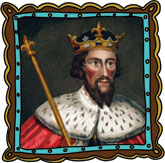
Alfred the Great was one of the most important kings in Anglo Saxon history. He became King of Wessex in the year 871, at a time when Britain was in great danger. Fierce warriors called Vikings were invading from Scandinavia. They had already taken over most of the Anglo Saxon kingdoms, leaving only Wessex free.

Alfred was clever and determined. At first he lost many battles and even had to hide in the marshes, but he did not give up. He gathered an army, trained his soldiers, and fought back. Eventually he defeated the Vikings in a huge battle and made a peace agreement with their leader. The Vikings were allowed to live in the eastern part of England, an area later called the Danelaw.

To keep his people safe, Alfred built strong, walled towns known as burhs. These protected villages helped people fight off future Viking attacks. He also created England’s first real navy, using ships to spot Viking raiders before they reached the coast.

Alfred cared about more than fighting. He wanted his people to live better lives. He encouraged education, had important books translated into English so more people could read them, and made fairer laws for everyone. Because of his kindness, bravery and clever ideas, he is the only English king to be known as “the Great.”

Legends say that when Alfred once hid in a peasant woman’s home, she asked him to watch some cakes in the oven. He became so busy thinking about battles that he let them burn, and she scolded him, not knowing he was the king!

Anglo Saxon religion and Gods

Before the Anglo Saxons became Christians, they believed in a group of powerful gods and goddesses. These gods were connected to nature, weather and everyday life. People prayed to them for protection, good harvests and success in battle.

Some of the most important gods were:

  • Woden – the chief god, wise and powerful. Warriors believed he guided them in battle.
  • Thunor – the god of thunder, strength and storms. He carried a mighty hammer and protected people from evil.
  • Freyja – the goddess of love, beauty and kindness. People believed she brought good luck and helped families.

The Anglo Saxons held feasts, made offerings and told stories about their gods. Sacred trees and special stones were sometimes used as places of worship.

Over time, Christian missionaries arrived from Ireland and Europe. Slowly, many Anglo Saxons became Christians. They built churches, monasteries and schools, and monks began writing books and copying important texts by hand.

Many of our weekdays are named after Anglo Saxon gods. For example, Thursday comes from Thunor’s Day, and Wednesday comes from Woden’s Day.

Beowulf and Anglo Saxon stories

The Anglo Saxons loved exciting stories about brave heroes, fierce monsters and dramatic battles. These tales were an important part of their culture. People gathered around fires in great halls to listen to storytellers called scops. A scop used singing, music and poetry to bring each story to life, because most people could not read or write.

The most famous Anglo Saxon story is Beowulf, one of the oldest stories in the English language. It is a long poem all about courage, loyalty and good versus evil.

The Story of Beowulf

Beowulf is a mighty warrior who travels to help a king whose hall is being attacked by a horrible monster called Grendel. Grendel sneaks in at night and carries off the king’s men. Beowulf bravely fights the monster with his bare hands and defeats him.

But the danger is not over. Grendel’s mother, a dreadful underwater creature, comes to seek revenge. Beowulf dives into her dark lake and battles her in her lair. After a fierce fight, he defeats her too.

Many years later, when Beowulf has become an old king, a fire-breathing dragon threatens his people. Even though he is elderly, Beowulf faces the dragon in one final battle. He defeats it but is badly wounded and dies a hero.

The story of Beowulf shows the values the Anglo Saxons admired most — bravery, strength and honour.

The Beowulf story is over 1,000 years old, and the only surviving copy was nearly destroyed in a fire.

Weapons and warriors

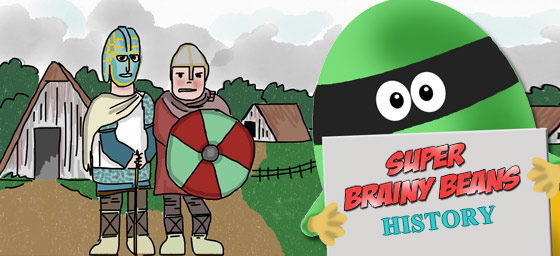
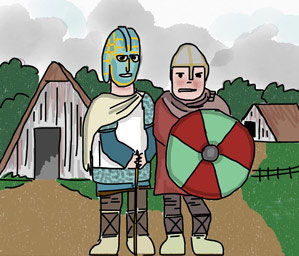
Anglo Saxon warriors were fierce fighters who trained from a young age. Most battles were fought with simple but effective weapons. The most common weapon was the spear, which could be thrown or used up close. Warriors also carried round wooden shields, often painted with bright patterns to show their tribe or family. These shields were held with one hand and used to push enemies back in battle.

Swords were the most prized weapon of all. They were difficult to make and extremely expensive, so only the richest warriors owned one. A good sword might be decorated with patterns on the blade and jewels on the handle. If a warrior had a sword, it was usually passed down for generations as a treasured family object.

Most warriors wore simple clothes to fight, but some wealthier ones protected themselves with chainmail shirts made from hundreds of tiny metal rings. These were heavy to wear but helped stop sword blows. Metal helmets were also worn, sometimes with nose guards to protect the face.

Anglo Saxon warriors fought in tight groups called shield walls, standing shoulder to shoulder so their shields formed a strong barrier. This was the most important battle tactic of the time.

To keep their weapons from rusting, warriors often rubbed animal fat onto their swords and shields. It smelled awful, but it worked.

What was the Anglo Saxon justice system?

The Anglo Saxons took law and order very seriously. Every village had its own rules, and people were expected to behave responsibly. If someone broke the law, the community worked together to decide what should happen next.

One of the main punishments was a fine called wergild, which means “man-price.” Instead of sending people to prison, the wrongdoer had to pay money to the person they hurt or to that person’s family. The amount depended on how important the injured person was in society. Hurting a noble cost far more than hurting a farmer. This system was designed to stop families from fighting and taking revenge.

For very serious crimes such as stealing or murder, the Anglo Saxons sometimes used something called a trial by ordeal. This was a dangerous test that was meant to show whether someone was innocent or guilty. They believed that God would protect an innocent person.

Some ordeals included:

  • Trial by hot iron: The accused had to carry a piece of red hot iron in their hand.
  • Trial by boiling water: They had to reach into boiling water to grab a stone.
  • Trial by cold water: They were tied up and thrown into a river or lake. If they floated, they were guilty; if they sank, they were innocent.

After the ordeal, a priest checked the wounds. If they healed quickly and cleanly, the person was judged innocent. If they became infected, they were found guilty.

In some villages, even deciding guilt could be a group effort. If a person’s neighbours refused to swear an oath saying they were trustworthy, that alone could make them guilty.

How did the Anglo Saxon period end?

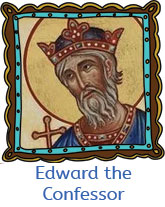
Edward the ConfessorThe Anglo Saxon period lasted for hundreds of years, but it came to a dramatic end in 1066.

In 1042, Edward the Confessor became King of England. He ruled peacefully, but there was a big problem — he had no children to become the next king. When Edward died in January 1066, his powerful adviser, Harold Godwinson, was chosen by the English nobles to be the new king.

However, things were not that simple. Edward had once made a promise to Duke William of Normandy, who lived in northern France. William believed this promise meant he should be the next King of England. So, he decided to claim the crown by force.

In September 1066, William gathered an army and sailed across the English Channel. On 14 October 1066, his Norman soldiers met King Harold’s army at the Battle of Hastings. It was a fierce and famous battle. King Harold was killed — some stories say he was shot in the eye with an arrow — and the English army was defeated.

William became known as William the Conqueror, and he was crowned king on Christmas Day in 1066.

This victory ended the Anglo Saxon era and began Norman rule, which changed England forever with new castles, new laws, and new ways of life.

Also on Super Brainy Beans

Romans Vikings Normans World War 2 Deserts & Drought Symmetry