Time: 793AD - 1066AD
Who were the Vikings and where did they come from?
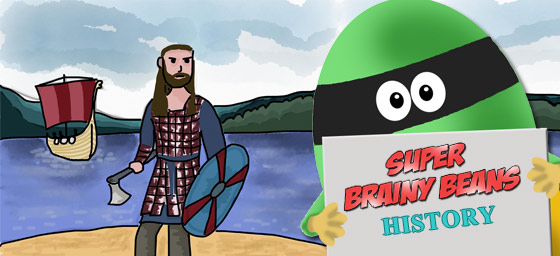
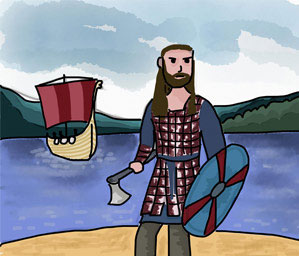
The word Viking probably means “pirate” or “raider”. The Vikings were people who lived over 1,000 years ago in places we now call Norway, Denmark and Sweden. They came from a region called Scandinavia in northern Europe.
Although Vikings are often shown as fierce warriors, they were much more than fighters. Most Vikings were farmers who grew crops and looked after animals. Others were traders, explorers, builders and skilled craftspeople. Viking families lived together in villages, and children helped with daily jobs from a young age.
Life in Scandinavia was hard. Winters were long and cold, the land was rocky, and there was not much good farmland. Because food was difficult to grow, many Vikings travelled away from their homeland to look for richer land, treasure and new places to settle.
The Vikings were excellent sailors and built fast wooden ships that could cross seas and travel up rivers. This allowed them to reach Britain, Ireland, France, and even places as far away as Russia and the Middle East. Some Vikings arrived to raid towns and monasteries, but many stayed and settled peacefully, becoming part of local communities.
 BBC Bitesize - Vikings
 Who were the Vikings and how did they Vikings fight? Found out this and more.
Vicious Vikings

Why did the Vikings invade Britain?
The Vikings invaded Britain for several important reasons. Life in Scandinavia was hard, with cold winters, rocky soil and not enough good farmland. Many Viking families struggled to grow enough food, so they looked to other countries for better land and new opportunities.
Vikings also wanted gold, silver and valuable goods. Britain had many wealthy towns and monasteries, often close to the coast or rivers. Because Vikings were excellent sailors, they could arrive quickly by ship, attack, and escape before soldiers could stop them.
At first, many Vikings came only to raid. They stole treasure, food and animals, then sailed back home. Over time, some Vikings decided to stay and settle instead. They built farms, married local people and became part of everyday life in Britain.
Not all Vikings were violent. Many were traders and farmers, exchanging goods like furs, jewellery and weapons with local people. However, their raids caused fear across Britain for many years.
 Jorvik Viking Centre
Everything you want to know about the Vikings, how they lived, what happened to them and more.
Viking jobs and daily life
Most Vikings were farmers, and daily life was hard work. They grew crops such as barley and oats and kept animals like cows, sheep and pigs. Farming provided food, clothing and tools, so everyone in the family helped. Vikings also fished, hunted and gathered berries to make sure they had enough to eat all year round.
Some Vikings had special jobs that were important to the village. Blacksmiths made tools and weapons, carpenters built houses and furniture, shipbuilders made longships, and traders travelled to other lands to swap goods. Fishermen provided food from rivers and seas.
Women ran the home. They cooked meals, made clothes, looked after animals, and cared for children. Women were highly respected and could even own land or run a farm if their husbands were away.
Viking children did not go to school. Instead, they helped with chores from a young age, such as fetching water, feeding animals, and helping in the fields. They learned important skills by watching and helping their parents.
 Ten Facts about the Vikings
Discover ten facts about the Vikings at the National Geographic Kids website.
 Kids Fun Facts - Vikings
Learn and discover fast, interesting fun facts on Vikings for kids.
Jorvik Viking CentreVisit the Jorvik Viking Centre in York and discover 2000 years of history.
Viking longships
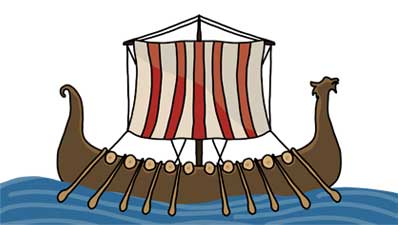
Viking longships were fast, narrow ships made from wooden planks. They were powered by a large square sail, but Vikings could also row the ship using oars when there was no wind. This made the ships very quick and easy to control.
Longships were specially designed to travel in two different ways. They were strong enough to cross rough seas, but also had shallow bottoms, which meant they could sail up rivers and along coastlines. This allowed the Vikings to travel far inland and surprise towns and villages that thought they were safe.
Because of their longships, Vikings became excellent explorers, traders and raiders. They used these ships to reach places like Britain, Iceland, Greenland and even North America. Longships helped Vikings spread their influence across much of Europe.

Also on Super Brainy Beans