The Sun, Earth and Moon
The Sun, Earth and Moon are part of a system that works together.
- Earth travels around the Sun
- The Moon travels around the Earth
- The Sun stays in the centre of this system
The Sun’s gravity keeps the planets moving around it. This system affects day and night, the phases of the Moon, and life on Earth by providing light and warmth.
Earth travels around the Sun in a path called an orbit. It takes one year (365 days) for Earth to complete one full journey around the Sun.
The Moon also moves in an orbit. It takes about 28 days for the Moon to travel once around the Earth.
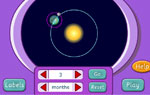 Earth, sun & moon orbit
Learn about the Earth, Sun & Moon's orbits as you experiment with different dates and times. Discover how long the earth takes to orbit the sun and more.
Day and night
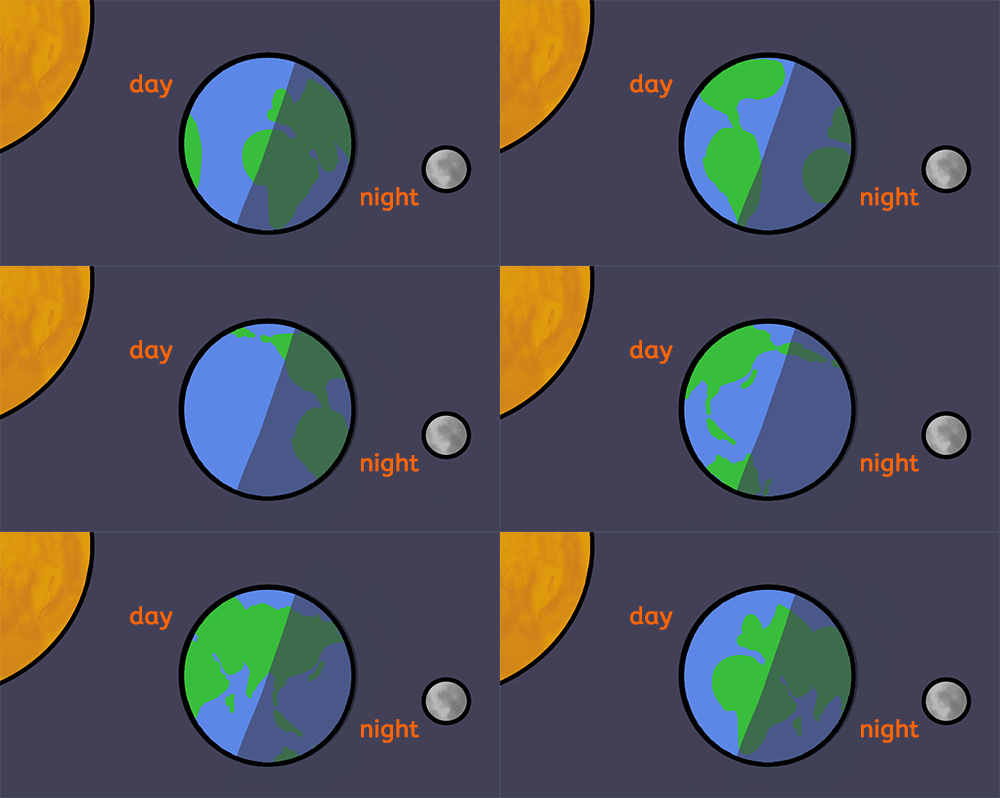 Earth is always spinning. This spinning movement is called rotation.
- The side of Earth facing the Sun has daytime
- The side of Earth facing away from the Sun has night-time
As Earth spins, different places move into daylight and then into darkness. This is why we have day and night every 24 hours.
Even though it looks like the Sun is moving across the sky, it is actually Earth that is spinning.

Our solar system
The solar system is a huge family of objects that travel through space together. It is made up of:
- the Sun
- eight planets
- moons that orbit some planets
- asteroids (rocky objects)
- comets (icy objects with long tails)
Everything in the solar system is held together by the Sun’s gravity.
The Sun at the Centre
The Sun is at the centre of the solar system. It is a giant star and is much bigger than any of the planets. The Sun gives out light and heat, which provide energy to the whole system.
Without the Sun:
- Earth would be dark and freezing
- plants could not grow
- animals and people could not survive
 BBC Bitesize - Space
Explore space, with its mysterious galaxies and black holes with these video clips
The planets and their order
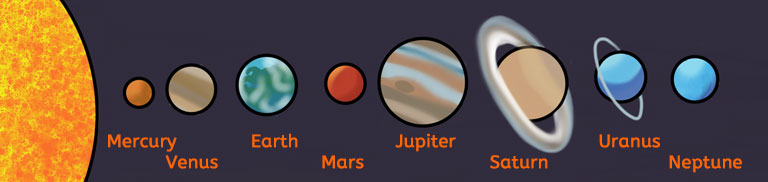
There are eight planets in our solar system. They are always in the same order from the Sun.
The planets are:
- Mercury
- Venus
- Earth
- Mars
- Jupiter
- Saturn
- Uranus
- Neptune
Each planet travels around the Sun in its own path called an orbit. It takes different amounts of time for each planet to complete one orbit.
 Bob The Alien
Let Bob the Alien give you a tour of the solar system.
Types of planets
The planets can be grouped into different types.
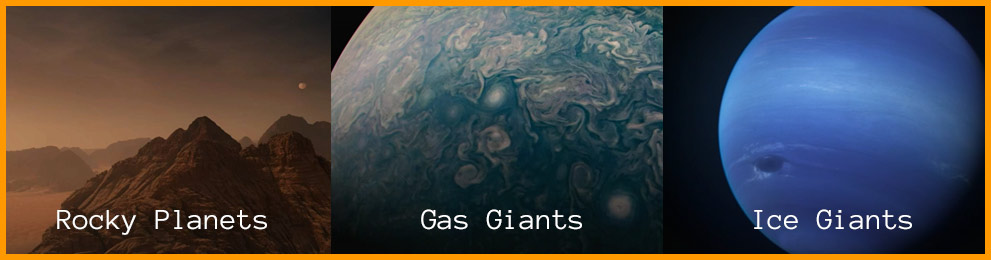
Rocky Planets
The four planets closest to the Sun are called rocky planets:
- Mercury
- Venus
- Earth
- Mars
These planets have solid surfaces made of rock and metal. Earth is special because it has water, air, and life.
Gas Giants and Ice Giants
The planets farther from the Sun are much larger.
- Jupiter and Saturn are called gas giants
- Uranus and Neptune are called ice giants
These planets do not have solid surfaces like Earth. They are made mostly of gas and ice and have many moons.
Moons, asteroids and comets
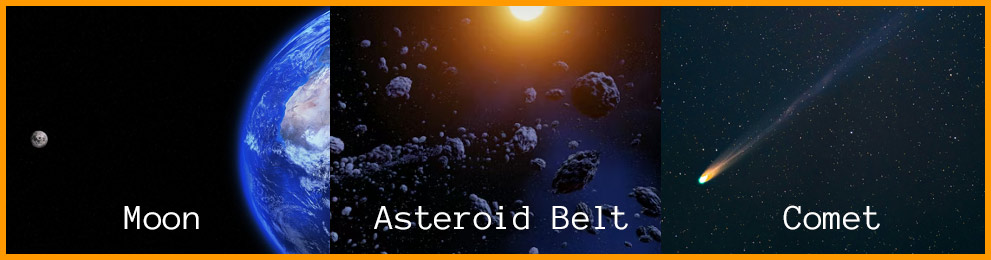
Many planets have moons that move around them. Earth has one Moon, but some planets have dozens.
Asteroids are rocky objects that mostly travel in a belt between Mars and Jupiter. This is called the asteroid belt.
Comets are made of ice and dust. When they get close to the Sun, they heat up and grow a glowing tail.
 Colour your universe
Find all hidden objects in the picture of the universe using the description to help you. See if you can find all of them.
Space travel and exploration
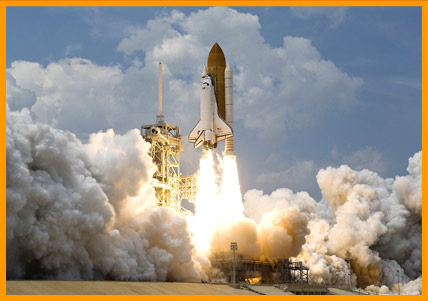 Humans have always been curious about space. To explore it, scientists and engineers have built rockets and spacecraft that can travel far beyond Earth.
Rockets and Spacecraft
Rockets are powerful machines that use fuel to blast into space. They carry spacecraft, which are specially designed vehicles that can travel in space and keep astronauts safe.
Some spacecraft travel without people on board. These are called space probes and satellites. They send pictures and information back to Earth to help scientists learn more about space.
Astronauts and space stations
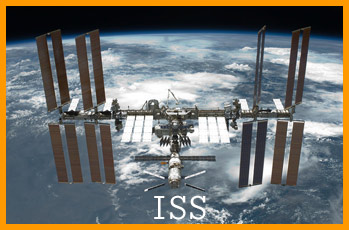 Astronauts are people who are trained to travel and work in space. Astronauts have:
- travelled to the Moon
- lived and worked on space stations
- carried out experiments in space
A space station (ISS) is a large spacecraft that orbits Earth. Astronauts can live there for months while they study how space affects the human body and test new equipment.
Why Do We Explore Space?
Space exploration helps scientists:
- learn more about Earth, the Moon and other planets
- understand how the Sun and space affect our planet
- develop new technology that can be used on Earth
Exploring space also helps us answer big questions about the universe and our place in it.
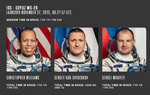 Who is in space
Find out who is currently in space. This is constantly updated to make sure you can easily find out how many people are in space right now.
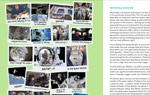 A week in the life of an astronaut
Imagine you are an astronaut. You have just woken up on a Monday morning aboard the International Space Station (ISS) and you feel your body floating and weightless inside your sleeping bag. You browse the schedule for the upcoming week and see your itinerary is jam packed.
Also on Super Brainy Beans