Human Body KS2
Year 5 & 6
Human Body KS2 kids learning at Primary School. Learn about parts of the circulatory, respiratroy and nervous system, fighting disease and human development.
Pick a level
The circulatory system
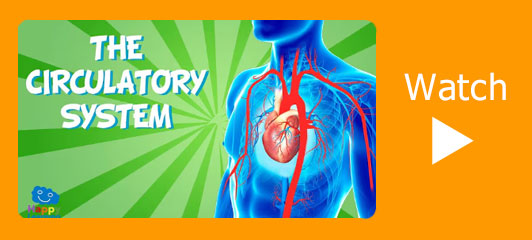
The circulatory system is like a transport network inside your body. It moves blood around, delivering oxygen and nutrients to every cell and carrying away waste products.
Without it, your body could not survive.
The circulatory system has three main parts:
The Heart
The heart is a powerful muscle about the size of your fist. It acts as a pump, pushing blood around your body all day and night.
Your heart beats around 100,000 times a day — that’s about 35 million times a year!
Blood Vessels
Blood travels through tubes called blood vessels. There are three main types:
- Arteries – Carry blood away from the heart.
- Veins – Carry blood back to the heart.
- Capillaries – Tiny blood vessels where oxygen and nutrients pass into cells and waste products are collected.
Blood
Blood is a specialised liquid tissue. It:
- Carries oxygen from the lungs
- Transports nutrients from digested food
- Removes carbon dioxide and other waste
- Helps fight infection
How it works
- The heart pumps oxygen-rich blood through the arteries to the body.
- Cells use the oxygen to release energy.
- Blood collects carbon dioxide and other waste.
- The blood returns to the heart through the veins.
- The heart sends it to the lungs to collect fresh oxygen.
This continuous cycle keeps every part of your body supplied with what it needs to function properly.
The respiratory system
The respiratory system works closely with the circulatory system. Its job is to help you breathe and supply oxygen to your blood.
What happens when you breathe?
- You breathe in oxygen through your nose or mouth.
- The air travels down your windpipe into your lungs.
- Oxygen passes from your lungs into your bloodstream.
- When you breathe out, you remove carbon dioxide, a waste gas produced by your cells.
Your lungs and heart work together as a team. The lungs provide oxygen, and the heart pumps it around the body.
Why this matters
When you exercise, your muscles need more oxygen. Your:
- Heart beats faster
- Breathing becomes quicker
- Blood moves more rapidly
This is your body responding to increased demand.
Transport of nutrients and water
After you eat and drink, your body must transport the useful substances from food and water to every cell. This is an essential job of the circulatory system.
During digestion, food is broken down into tiny particles called nutrients. These include:
- Carbohydrates (for energy)
- Proteins (for growth and repair)
- Fats (for energy and insulation)
- Vitamins and minerals (to keep the body healthy)
These nutrients are absorbed through the walls of the small intestine and enter the bloodstream.
Transport by the blood
Your blood acts like a delivery system. Once nutrients enter the bloodstream, the heart pumps the blood through blood vessels to every part of the body.
The circulatory system carries:
- Oxygen (from the lungs)
- Nutrients (from digested food)
- Water
These are delivered to every cell so that your body can release energy, grow and repair itself.
Water transportation
Water is vital for survival. It:
- Helps transport nutrients
- Regulates body temperature
- Removes waste products
- Keeps cells hydrated
Water is absorbed into the bloodstream and carried throughout the body. Without enough water, cells cannot function properly.
Thanks to your circulatory system, nutrients and water reach every cell, helping your body stay strong and full of energy.
The brain and the nervous system
Your brain is the control centre of your body. It receives information, makes decisions and sends instructions to the rest of the body.
It:
- Controls movement
- Controls thoughts and memory
- Manages emotions
- Regulates breathing and heartbeat
- Sends messages through nerves
The brain is part of the nervous system, which includes the spinal cord and a network of nerves spread throughout your body.
How messages travel
Nerves act like electrical cables. They carry tiny electrical signals between the brain and the rest of the body.
For example:
- When you touch something hot, nerves in your skin send a message to your brain.
- Your brain quickly sends a message back to your muscles.
- Your muscles move your hand away.
Reflexes
Some responses happen even before your brain has time to think. These are called reflexes.
A reflex is a fast, automatic response to keep you safe — such as pulling your hand away from a hot surface or blinking when something flies toward your eye.
Reflexes are controlled by the spinal cord and happen in a fraction of a second.
Lifestyle and health
The choices you make every day affect how well your body works — now and in the future.
Healthy habits include:
- Regular exercise
- A balanced diet
- Enough sleep
- Drinking plenty of water
These help keep your heart, lungs, brain and muscles working efficiently.
Diet
Food is your body’s fuel. Eating a variety of fruits, vegetables, whole grains and protein sources helps you stay energetic and supports growth. Eating too many sugary or highly processed foods can increase the risk of health problems over time, including obesity and heart disease.
Exercise
Physical activity strengthens:
- The heart
- The lungs
- Muscles and bones
Exercise also improves concentration, boosts mood and helps you sleep better. When you exercise, your circulatory and respiratory systems work harder, making them stronger over time.
Drugs and harmful substances
Some medicines are important when prescribed by a doctor. However, harmful substances such as tobacco, alcohol misuse and illegal drugs can seriously damage the body.
For example:
- Smoking damages the lungs and reduces oxygen in the blood.
- Drug misuse can affect the brain, heart and other vital organs.
Making safe choices protects your health.
Lifestyle habits
Daily habits also matter. Getting enough sleep, managing stress and staying active all support long-term health.
Looking after your body now helps reduce the risk of serious illness later in life.
Fighting disease
Every day, your body comes into contact with tiny microorganisms called germs. Some germs can cause illness.
Two common types are:
- Bacteria
- Viruses
Your body has a defence system called the immune system.
White blood cells
Your blood contains special cells called white blood cells. They:
- Detect harmful germs
- Destroy invading bacteria and viruses
- Help your body recover from infection
Vaccines
Vaccines help protect you from certain diseases. They work by safely training your immune system to recognise and fight specific germs.
Because of vaccines, many serious diseases are now much less common.
Good Hygiene
Practising good hygiene helps prevent the spread of germs.
Washing your hands properly is one of the most effective ways to stop germs spreading.
We often touch our:
- Face
- Nose
- Mouth
If we do not wash our hands after using the toilet, before eating, or after coughing and sneezing, germs can enter our bodies and make us ill.
To wash your hands properly:
- Use warm water and soap.
- Rub hands together for at least 20 seconds.
- Clean between fingers and under nails.
- Rinse and dry thoroughly.
Good handwashing can reduce how often you get sick.
Catch it, bin it, kill it
If you have a cold:
- Use a tissue when you cough or sneeze.
- Cover your mouth and nose fully.
- Put used tissues straight in the bin.
- Wash your hands afterwards.
Do not leave used tissues lying around, as they can spread germs to others.
Human development
Humans change throughout their lives. From the moment we are born to old age, our bodies and minds go through different stages of development.
Each stage brings physical changes, new abilities and greater responsibilities.
The main stages of human development are:
- Infancy
- Childhood
- Adolescence
- Adulthood
- Old age
Infancy
Infancy is the stage from birth to around two years old. Babies grow very quickly during this time.
They learn important skills such as:
- Sitting
- Crawling
- Walking
- Talking
Their brains develop rapidly as they begin to understand the world around them.
Childhood
During childhood, growth continues steadily. Muscles become stronger, bones harden, and children gain more coordination and independence.
This is when many important skills develop, including:
- Reading and writing
- Problem-solving
- Making friendships
- Learning responsibility
Adolescence and puberty
Adolescence is the stage when children grow into young adults. A key part of adolescence is puberty.
Puberty is a period of physical and emotional change when the body begins to mature into an adult body. It usually begins between the ages of 8 and 14, but everyone develops at their own pace.
Physical changes during puberty
For both boys and girls:
- Growth spurts (rapid increase in height)
- Body hair grows under arms and around the pubic area
- Skin may become oilier, sometimes causing spots (acne)
- Increased sweating
For boys:
- Voice deepens
- Facial hair may begin to grow
- Shoulders broaden
- Testicles and penis grow
For girls:
- Breasts develop
- Hips widen
- Menstruation (periods) begin
- Ovaries begin releasing eggs
These changes happen because of hormones — special chemical messengers in the body.
Emotional changes during puberty
Puberty does not only affect the body. It can also affect feelings and behaviour.
Young people may:
- Experience stronger emotions
- Become more aware of friendships and relationships
- Seek more independence
- Feel self-conscious at times
These emotional changes are normal and part of growing up.
It is important to remember:
- Everyone develops at different times.
- Changes may feel awkward, but they are completely natural.
- Talking to a trusted adult can help if you have questions or concerns.
Adulthood
In adulthood, the body is fully developed. Adults often take on responsibilities such as working, caring for families and contributing to their communities.
Healthy habits — including good nutrition, exercise and enough sleep — help maintain strength and wellbeing.
Old Age
As people grow older, their bodies gradually change. This natural process is called ageing.
Common changes may include:
- Grey or thinning hair
- Wrinkles in the skin
- Reduced muscle strength
- Stiffer joints
- Changes in eyesight or hearing
Although the body may slow down, staying physically active and mentally engaged helps people remain healthy and independent for longer.
Also on Super Brainy Beans