Count to 100
 Point out house numbers on doors, when out and about or the numbers on the shelf of the supermarket and test your child to see if they know their numbers.
Print out our 100 number square to learn numbers to 100.
Counting on and back
A game that can be played anywhere. Say a number and see if your child can say what number comes next.
Once your child has mastered this try seeing if they can say the number before.
This game can be played counting in ones, tens, fives....etc.
Order numbers 0-20
Play a simple game with the number flashcards. Use numbers that your child is familiar with and ask them to rearrange them in order. Once they are confident with ordering a few numbers you can add more. Leave some numbers out and ask them to order what is left.
Ordinal numbers
Play a game with cars pushing them along the floor and awarding them places (1st, 2nd, 3rd) to the cars that have gone the furthest.
Odd and even numbers

Place Value
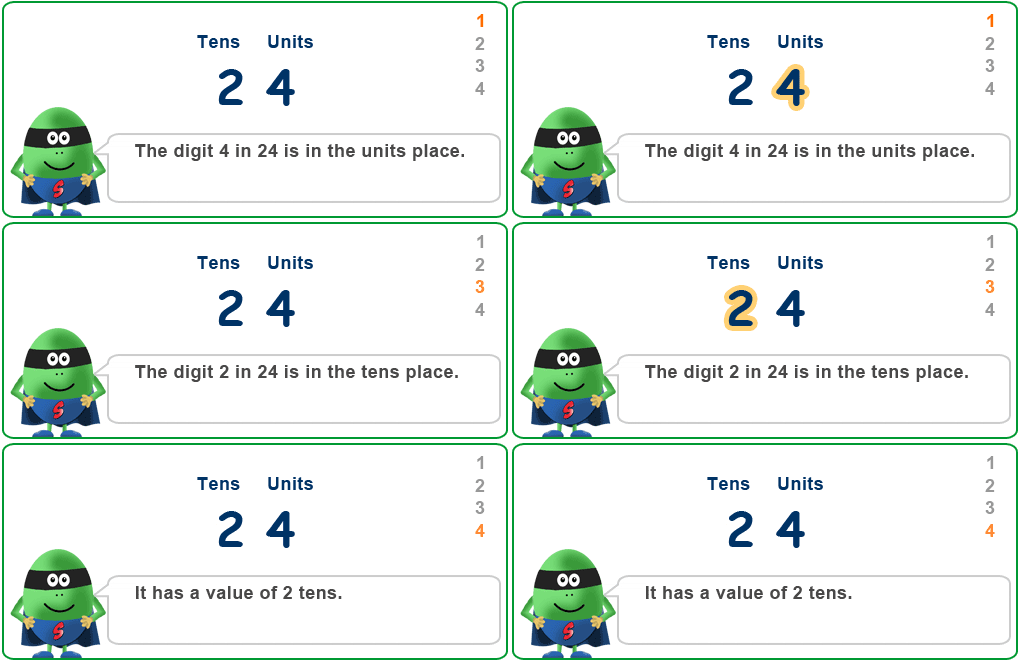
A digit's value is how much the digit is worth in a number. This depends were the digit is placed.
Help Molly by cutting out the unit weights and
putting the right number on the scales to make them balance. <
Partitioning - three digit numbers
Partitioning is when you spilt a number into hundreds, tens & units.
358 can be split into
| Hundreds | Tens | Units |
| 3 | 5 | 8 |
300 + 50 + 8 = 358
Writing digits 100
Learn to write a number to 100 correctly by copying the numbers here.
If you need additional practice forming those numbers correctly you can print our Writing worksheets which can be found on our Reception page.
Number Sequences
In Year 2 you should now recognise more complex number sequences using odd and even numbers. You should be able to continue a sequence that increases or decreases in regular steps.
 What is a number sequence?
A number sequence is a list of numbers that are linked by a rule. See if you can find the rules.
Work out the missing numbers in these sequences.
Also on Super Brainy Beans