
Symmetry, Rotation & Direction
Year 3 & 4
Learn about shape symmetry, reflections, translations, compass points, and coordinates. Clear Lower Key Stage 2 guides for Years 3 & 4.
Pick a level
Lines of symmetry in shapes
You will spot lines of symmetry in lots of different 2D shapes. Some shapes have many lines of symmetry, while others have none at all.
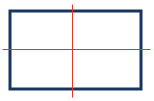
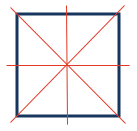
Square4 lines of symmetry | ![]() | Rectangles5 lines of symmetry | ![]() |
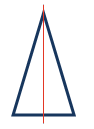
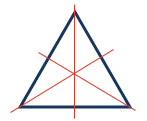
Isosceles Triangle1 lines of symmetry | ![]() | Equilateral Triangle3 lines of symmetry | ![]() |
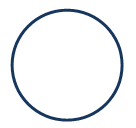
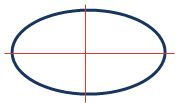
CircleInfinite lines of symmetry | ![]() | Ellipse2 lines of symmetry | ![]() |
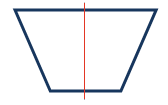
Rhombus2 lines of symmetry | ![]() | Trapezium4 lines of symmetry | ![]() |
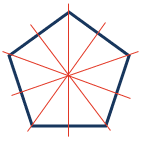
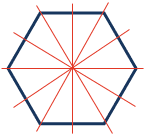
Pentagon5 lines of symmetry | ![]() | Hexagon6 lines of symmetry | ![]() |
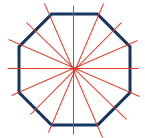
Octagon8 lines of symmetry | ![]() |
Drawing reflections
When you reflect a shape, you flip it across a mirror line. Every corner of the new reflected shape (called the image) must be the exact same distance from the mirror line as the original shape (called the object).
How to draw reflection on a grid
- Mark each corner of your shape with a clear dot.
- Count how many squares it is from the first dot to the mirror line.
- Count that exact same number of squares on the other side of the mirror line and draw a new dot.
- Repeat this for every corner, then join the dots with a ruler.
When drawing a reflection, remember that the object is flipped.

Symmetry Shapes
Create the pattern in symmetry. Try horizontal lines, vertical lines and diagonal lines.Translating shapes (sliding)
In maths, moving a shape without turning or flipping it is called translation. The shape simply slides to a new spot on a grid.
How to translate a shape
- Pick one corner of your shape.
- Count how many squares left or right you need to move it, then count how many squares up or down.
- Mark the new dot, repeat for the other corners, and join them up.