Money Year 1 & 2

Money

Money Year 1 & 2

Money Year 1 & 2, KS1. Primary homework help with Maths. Learn pounds, pence, types of coins, counting and adding money.

Pick a level

What is money?

Money is something we use to buy things. We use money every day to pay for food, clothes, toys and many other things. Money helps us know how much something costs and how much we need to pay for it.

In the UK, money comes in two forms: coins and notes. Coins are made of metal and notes are made from a special type of paper. Each coin and note has a different value, which tells us how much it is worth.

Learning about money helps us count, shop and work out how much things cost.

Coins

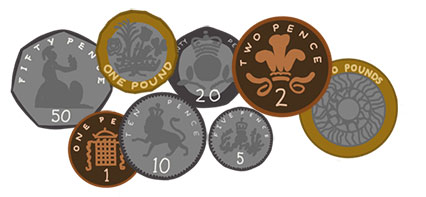
Money coins

Notes

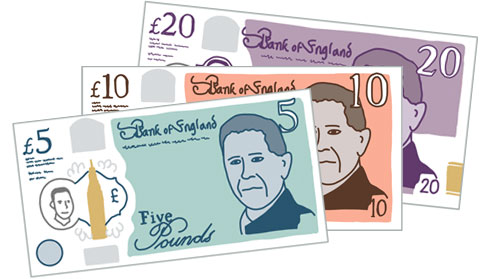
Money notes

Recognising coins

Coins come in different shapes, sizes and colours. Each coin has a value that tells us how much it is worth.

Learning to recognise coins will help you count money, buy things and work out how much something costs.

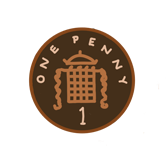
1p coin

One Penny
The 1p coin is worth one penny.

2p coin
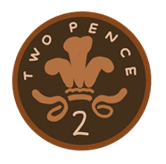
Two Pence
The 2p coin is worth two pennies.

5p coin

Five Pence
The 5p coin is worth five pennies.

10p coin
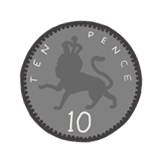
Ten Pence
The 10p coin is worth ten pennies.

Two 5p coins have the same value as one 10p coin.

20p coin

Twenty Pence
The 20p coin is worth twenty pennies.

50p coin
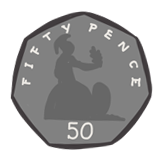
Fifty Pence
The 50p coin is worth fifty pennies.

Two 50p coins have the same value as £1.

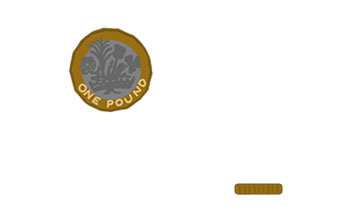
£1 coin
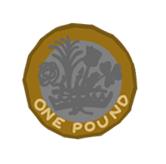
One Pound
The £1 coin is worth one pound.

£1 is the same as 100p.

£2 coin
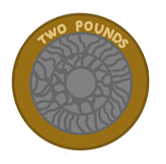
Two Pounds
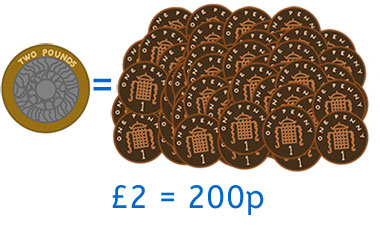
The £2 coin is worth two pounds.

£2 is the same as 200p.

How can you tell coins apart?

Coins can look different because they have different:

  • Shapes
  • Sizes
  • Colours

You can also look at the number written on the coin to see how much it is worth.

Order the coins

  1. Get hold of some coins (real or play money)
  2. Put them in order of lowest to highest value.
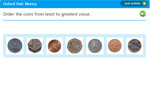
Coins in a lineCoin ordering
Order the coins from least to greatest value.
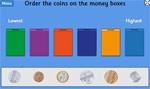
Row of money boxes & coinsOrdering coins
Order the the coins on to the money boxes from lowest to highest. Select Ordering.

Recognising notes

Notes are another type of money. They are worth more than most coins and are used to pay for more expensive things.

Each note has a value written on it to show how much it is worth. The notes you will see are:

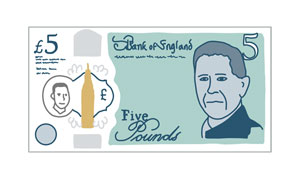
£5 note

£5 note
A £5 note is worth five pounds.

£10 note
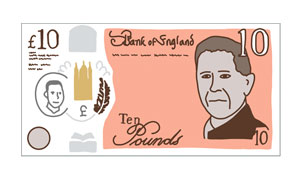
£10 note
A £10 note is worth ten pounds.

£20
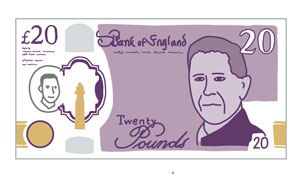
£20 note
A £20 note is worth twenty pounds.

£50
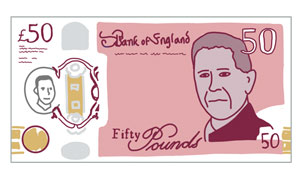
£50 note
A £50 note is worth fifty pounds.

Notes and Coins

Notes are worth more than most coins.

Value of £1
A £1 coin is worth one pound.

Value of £5
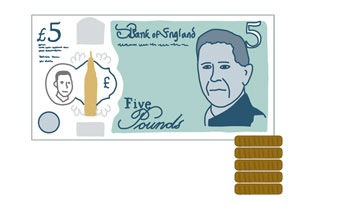
A £5 note is worth the same as five £1 coins.
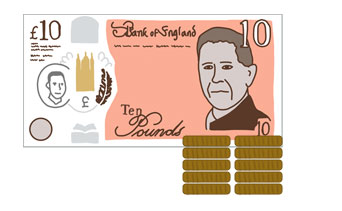
Value of £10
A £10 note is worth the same as ten £1 coins.

Notes make it easier to carry larger amounts of money.

Order the money

  1. Get hold of some money notes (real or play money)
  2. Put them in order of lowest to highest value.
  3. Now add some coins and mix the coins and notes up.
  4. Now put them in order of lowest to highest value.
  5. Which coin or note is worth the most?

Pounds and pence (£ and p)

Money is measured in pounds (£) and pence (p).

We use:

  • £ for pounds
  • p for pence

Pounds & Pence

Understanding pounds and pence

Pounds are worth more than pence. There are 100 pence in £1.
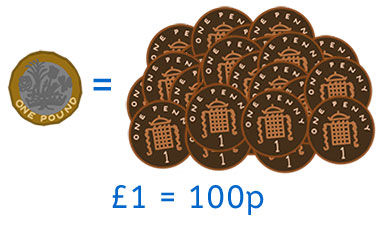
100p in pounds

200p in pounds

Let's compare some amounts:

  • 50p is less than £1
  • £1 is more than 50p
  • £2 is more than £1

When counting money, it is important to know how pounds and pence work together.

Counting money

Counting money helps us work out how much something is worth.

Counting coins

You can count coins by adding their values together.
Example:
10p + 10p + 10p = 30p

Counting 30p

Counting mixed coins

Sometimes we have different coins.
Example:
20p + 10p + 5p = 35p
Start with the largest coin and count on.

Counting 30p

Finding the total value of coins

To find the total value:

  1. Count each coin.
  2. Add the values together.
  3. Write the total amount.

Counting 18p

Piggy bank with coinsCounting coins
Add up the coins correctly and find the sum to add them to the piggy bank. Choose Counting .
Coin calculator game playCoin Calculator
Recognise different denominations of coins. Split bigger coins into smaller to work out change.
Custom car garage game playCustom Car Garage
Customise your sports car by choosing from the menu and then using the correct coins to pay for each item.
Making amounts

There is often more than one way to make the same amount.
50p =

50p
One 50p coin

50p in mixed change
Two 20p coins and one 10p coin

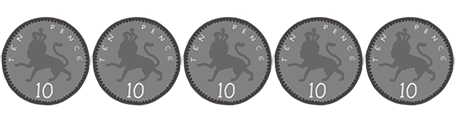
50p in 10pFive 10p coins

Adding pounds and pence

Sometimes your total will be more than 100p.

Remember:

100p = £1

When your answer is 100p or more, it is usually easier to write it in pounds.
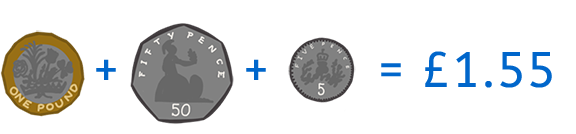
Adding coins to £1.55

Notice that we write £1.55, NOT £1.55p.

When an amount includes pounds, we only use the £ symbol.

Wallet with coinsCoin Cruncher
Do you know your coins? Put your knowledge and your money maths to the test as you make up the right amount in pounds or count the coins and select the answer.
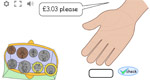
Hand with coinsCashing in
Give the right coins to pay the amount shown.

Subtracting money

Subtracting money means taking an amount away.
Subtracting coins from 50p

Finding how much is left

If you spend some money, you can subtract to find how much remains.

If you have £1 and spend 40p on a apple, you have 60p left.
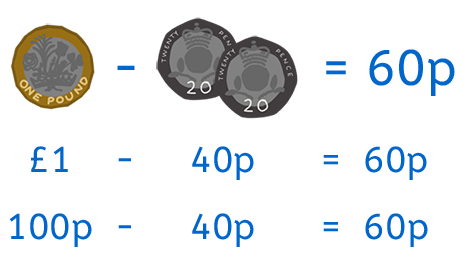
Subtracting coins from 100p

Toy Shop Money game playToy Shop Money
Pay the correct amount of money for the toy using the coins.

Money match game playMoney Match
Use the coins from the virtual purse to make various amounts from 20p to £5.00. Scroll down to select Money Match.
Money box with coinsMoney Box
Drag coins into a money box and then calculate the money box total. Uses coins 1p to £2.00 to a maximum total of £20.00. Scroll down to select Moneybox to £20.00.
Shop shelves with toys and pricesWhite Elephant
Choose items to buy and then pay for them by dragging coins onto a hand. Scroll down to select White Elephant.

Also on Super Brainy Beans

Time Measuring Addition Subtraction Romans United Kingdom