

Symmetry
Year 5 & 6
Symmetry Year 5 & 6 KS2. Master complex reflections, coordinates, and rotational symmetry. Advanced geometry guides and practice for Upper Key Stage 2.
Pick a level
Rotational symmetry
When a shape has rotational symmetry it means that you can turn it to fit into itself. The point on where the shape turns around is the centre of rotational symmetry. The order of rotational symmetry is the number of times that it fits into itself when it's turned 360°.
Rotational symmetry in shapes
Different shapes have a different amount of order of rotational symmetry.
Here is a list of common shapes and how many order of rotational symmetry they have.
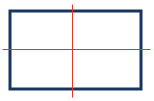
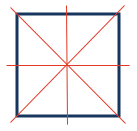
Square4 lines of symmetry | ![]() | Rectangles5 lines of symmetry | ![]() |
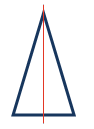
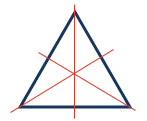
Isosceles Triangle1 lines of symmetry | ![]() | Equilateral Triangle3 lines of symmetry | ![]() |
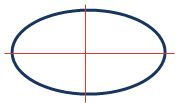
CircleInfinite lines of symmetry | ![]() | Ellipse2 lines of symmetry | ![]() |
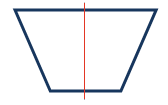
Rhombus2 lines of symmetry | ![]() | Trapezium4 lines of symmetry | ![]() |
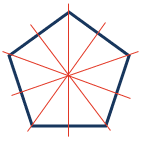
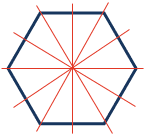
Pentagon5 lines of symmetry | ![]() | Hexagon6 lines of symmetry | ![]() |
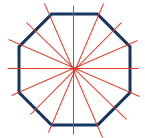
Octagon8 lines of symmetry | ![]() |
Advanced symmetry and coordinate reflections
In Upper Key Stage 2, you will use your knowledge of symmetry and reflections on a coordinate grid (x and y axes). Instead of just counting squares from a mirror line, you might be asked to reflect a shape across the y-axis or x-axis. To reflect a point across the vertical y-axis, keep the y-coordinate the same and change the x-coordinate to its negative opposite. Always check your vertex points carefully to ensure the shape's size, angles, and orientation remain identical after the flip!
Deep dive into rotational symmetry
By Years 5 and 6, you should be able to identify both the lines of symmetry and the order of rotational symmetry for complex 2D shapes, regular polygons, and patterns.
When testing a shape for rotational symmetry:
- Place a pencil point firmly on the centre of rotation.
- Rotate the shape slowly clockwise.
- Count every single time the shape looks identical to how it started before you reach a full 360° turn.
Top tip: Always find a distinct feature (like a specific corner or a shaded part) to track your turns so you don't lose count!
Symmetry in everyday life and design
Symmetry is everywhere around us! Architects, engineers, and artists use symmetry to create balance and strength in buildings, bridges, and logos. Recognising how shapes behave when reflected or rotated helps build strong spatial reasoning skills for secondary school geometry.