
Symmetry Year 5 & 6

Symmetry for kids

Symmetry

Symmetry
Year 5 & 6

Symmetry Year 5 & 6 KS2. Master complex reflections, coordinates, and rotational symmetry. Advanced geometry guides and practice for Upper Key Stage 2.

Pick a level

Rotational symmetry

Rotational symmetry exampleWhen a shape has rotational symmetry it means that you can turn it to fit into itself. The point on where the shape turns around is the centre of rotational symmetry. The order of rotational symmetry is the number of times that it fits into itself when it's turned 360°.

Rotational symmetry in shapes

Different shapes have a different amount of order of rotational symmetry.

Here is a list of common shapes and how many order of rotational symmetry they have.

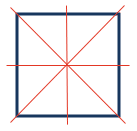
Square

4 lines of symmetry
4 order of rotational symmetry

Square lines of symmetry
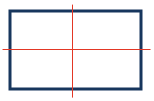
Rectangles

5 lines of symmetry
1 order of rotational symmetry

Rectangle lines of symmetry
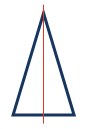
Isosceles Triangle

1 lines of symmetry
1 order of rotational symmetry

Isosceles triangle lines of symmetry
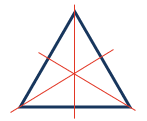
Equilateral Triangle

3 lines of symmetry
3 order of rotational symmetry

Equilateral triangle lines of symmetry
Circle

Infinite lines of symmetry
Infinite order of rotational symmetry

Circle lines of symmetry
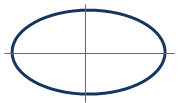
Ellipse

2 lines of symmetry
2 order of rotational symmetry

Ellipses lines of symmetry
Rhombus

2 lines of symmetry
2 order of rotational symmetry

Rhombus lines of symmetry
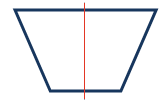
Trapezium

4 lines of symmetry
4 order of rotational symmetry

Trapezium lines of symmetry
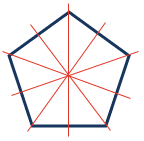
Pentagon

5 lines of symmetry
1 order of rotational symmetry

Pentagon lines of symmetry
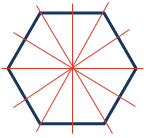
Hexagon

6 lines of symmetry
6 order of rotational symmetry

Hexagon lines of symmetry
Octagon

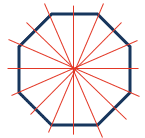
8 lines of symmetry
8 order of rotational symmetry

Octagon lines of symmetry

Advanced symmetry and coordinate reflections

In Upper Key Stage 2, you will use your knowledge of symmetry and reflections on a coordinate grid (x and y axes). Instead of just counting squares from a mirror line, you might be asked to reflect a shape across the y-axis or x-axis. To reflect a point across the vertical y-axis, keep the y-coordinate the same and change the x-coordinate to its negative opposite. Always check your vertex points carefully to ensure the shape's size, angles, and orientation remain identical after the flip!

Deep dive into rotational symmetry

By Years 5 and 6, you should be able to identify both the lines of symmetry and the order of rotational symmetry for complex 2D shapes, regular polygons, and patterns.
When testing a shape for rotational symmetry:

  1. Place a pencil point firmly on the centre of rotation.
  2. Rotate the shape slowly clockwise.
  3. Count every single time the shape looks identical to how it started before you reach a full 360° turn.

Top tip: Always find a distinct feature (like a specific corner or a shaded part) to track your turns so you don't lose count!

Free online Maths games

Symmetry in everyday life and design

Symmetry is everywhere around us! Architects, engineers, and artists use symmetry to create balance and strength in buildings, bridges, and logos. Recognising how shapes behave when reflected or rotated helps build strong spatial reasoning skills for secondary school geometry.

Also on Super Brainy Beans

Shapes Angles Measuring Time Light & Sound Celts