Solids, Liquids and Gases
All materials around us are called matter, and matter can exist in three different states: solids, liquids and gases.
Solids
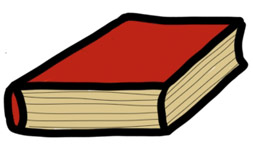 Solids keep their own shape and do not flow. They are usually hard or firm.
Examples of solids:
- A table
- A book
- A rock
- Ice
Solids stay the same shape unless a force is used to bend, squash or break them.
Liquids
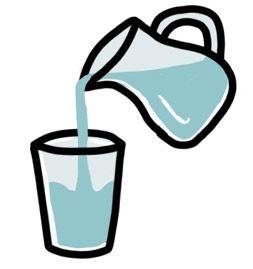 Liquids flow and change shape depending on the container they are in. They do not have a fixed shape, but they do have a fixed amount.
Examples of liquids:
- Water
- Milk
- Juice
If you pour a liquid into a cup, bowl or bottle, it takes the shape of that container.
Gases
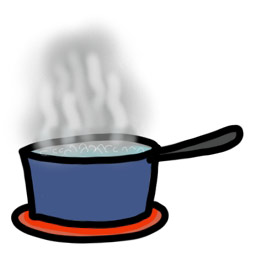 Gases spread out and fill the space they are in. They cannot be held easily because they move in all directions.
Examples of gases:
- Air
- Steam
- Oxygen
You cannot see most gases, but you can feel them, like wind blowing on your face.
 Solids, liquids and gases
Have fun learning about solids, liquids and gases by experimenting with different forms, using different conditions to change them from one form to another.
How materials change state
Some materials can change from one state to another. This is called a change of state. These changes usually happen when a material is heated or cooled.
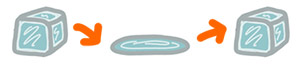 For example:
- Ice melts to become water
- Water freezes to become ice
Even though the material changes state, it is still the same material.
Melting, freezing, evaporating and condensing
Scientists use special words to describe changes of state:
- Melting: solid → liquid
(ice turning into water) - Freezing: liquid → solid
(water turning into ice) - Evaporating: liquid → gas
(water turning into water vapour) - Condensing: gas → liquid
(water vapour turning into droplets)
Melting ice
- Put 4 small ice cubes in a bowl.
- Sprinkle one with sugar, one with salt, one with pepper and leave the other one.
- Watch what happens over time.
- Can you see it melting? Which one melts fastest?
The temperature at which ice changes to water is called its melting point. Salt lowers the melting point, so it melts the fastest. Pepper lowers the melting point the least, so it melts the slowest.
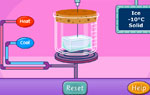 State of water
Learn about the changing states of water as you experiment with different temperatures. What happens when water reaches 100 degrees?
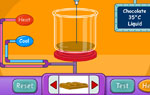 Melting points
Experiment with temperature while learning about the melting points of different substances. At what point do things like chocolate & aluminium melt?
The water cycle
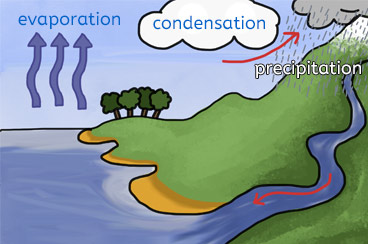 Water is always moving around the Earth in a continuous journey called the water cycle. This cycle helps move water from rivers, lakes and seas into the air and back down to the ground again.
Evaporation
When water is warmed by the Sun, some of it evaporates. This means it changes from a liquid into a gas called water vapour. You cannot see water vapour, but it rises up into the air.
Condensation
As the water vapour rises higher into the sky, it cools down. When this happens, it condenses, changing from a gas back into tiny droplets of liquid water. These droplets join together to form clouds.
Precipitation
When the water droplets in clouds become too heavy, they fall back to the ground as rain, snow, hail, or sleet. This part of the cycle is called precipitation.
Once the water reaches the ground, it collects in rivers, lakes and oceans, and the cycle begins again.
 Water Cycle - How does it work?
Learn about the water-cycle and how it works.
See stages of the water-cycle from the sea to the land and learn about the types of precipitation and cloud that we get.
What are rocks?
Rocks are solid materials found naturally on Earth. They are made from minerals and can be found in many places, such as mountains, cliffs, beaches and underground. Rocks come in lots of different colours, shapes and sizes, and they can be very hard or quite soft.
Hard Rocks
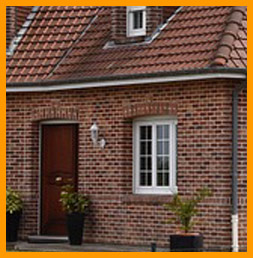 Hard rocks are strong and difficult to break. They cannot be scratched easily and do not crumble when you touch them. When hard rocks are polished, they often become smooth and shiny.
Because they are strong and long-lasting, hard rocks are used for:
- buildings and walls
- roof tiles
- kitchen worktops
- tools in the Stone Age
Examples of hard rocks include granite, marble and flint.
Soft Rocks
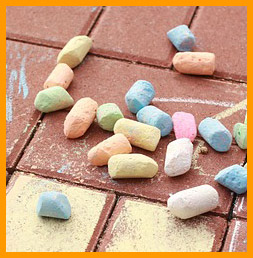 Soft rocks are much easier to break or scratch. Some soft rocks crumble easily and can break apart when handled.
Examples of soft rocks include chalk and limestone. Chalk is very soft, which is why it is useful for writing on blackboards—it crumbles and leaves marks behind.
Soft rocks often wear away more quickly than hard rocks, especially when exposed to wind and rain.
 BBC Bitesize - What is a rock?
Learn about what a rock is then test your knowledge with the interactive quiz.
Comparing rocks
Scientists compare rocks by looking closely at their properties, such as:
- how hard or soft they are
- whether they crumble or stay strong
- how smooth or rough they feel
- whether water can soak through them
- Permeable rocks allow water to soak through them. Many soft rocks are permeable. When water enters these rocks, it can cause them to weaken, crumble or slowly wear away.
- Impermeable rocks do not allow water to soak through. Water runs off their surface instead. Many hard rocks are impermeable, which makes them very useful for building and roofing because they help keep water out. Granite and slate are good examples of impermeable rocks.
By comparing rocks, scientists can decide what they are best used for.
 Rocks, minerals & soils
Learn about rocks, minerals & soils as you complete a variety of experiments. Do the objects split? Do they float? Answer these questions and more.
Soil is tiny rocks
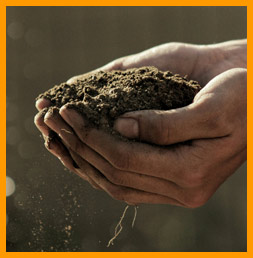 Soil is made from tiny pieces of rock mixed with organic matter, such as dead plants and animals. Over many thousands of years, rocks are broken down into smaller and smaller pieces by wind, rain, ice and changes in temperature. This process is called weathering. As the rock fragments mix with rotting leaves, plant roots and tiny organisms, soil is formed.
Soil is not all the same. Some soil feels sandy and dry, some feels sticky like clay, and some is dark and crumbly. Different types of soil are better for growing different plants.
Soil is very important because it helps plants grow by holding water and nutrients. It also provides homes for worms, insects and many tiny living organisms. Without soil, most plants and animals on land would not be able to survive.
 BBC Bitesize - What is soil made from?
Learn about soil and then test your knowledge with the interactive quiz.
Fossils
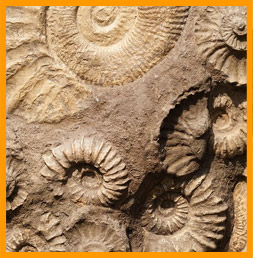 A fossil is the preserved remains or traces of a living thing from long ago. When a plant or animal died millions of years ago, it sometimes became buried under layers of mud, sand or ash. Over a very long time, these layers were pressed together and slowly turned into rock.
The soft parts of the organism usually decayed, but harder parts such as bones, shells or teeth were left behind. Sometimes, only the shape or imprint of the living thing remained in the rock. These preserved remains or imprints are called fossils.
Fossils are usually found in sedimentary rocks. They help scientists learn about what plants and animals lived on Earth long before humans existed. By studying fossils, scientists can discover how living things have changed over time and what Earth was like in the past.
 BBC Bitesize - How are fossils made?
Learn about the how fossils are made then test your knowledge with the interactive quiz.
 BBC Bitesize - What can we learn from fossils?
Watch the video to find out what we can learn about fossils.
Also on Super Brainy Beans