What is a material?
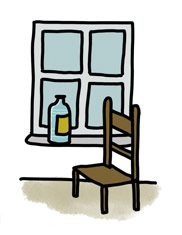 A material is what something is made from. Everything around us is made from one or more materials.
An object is a thing you can see or use, like a chair or a cup
These are examples of some objects and the material they are made from:
- A chair might be made from wood
- A bottle might be made from plastic
- A window might be made from glass
We use different materials because they are good at different jobs. Some materials are hard, some are soft, some are bendable, and some are strong.
People choose materials carefully to make things safe, useful and long-lasting.
What material is it?
- Look around at the objects in your room.
- Can you name the materials that your toys, clothes or furniture are made from?
- Can you find objects that are made from the same material?
Natural and man-made materials
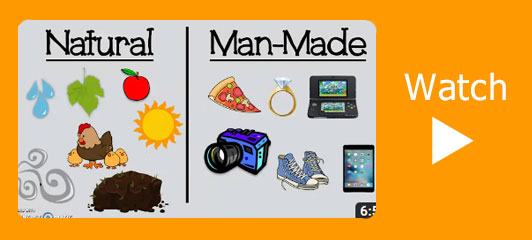
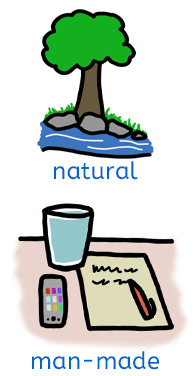 Materials can be grouped into natural and man-made materials.
Natural materials come from nature. They are found in the world around us and are not made by people.
Examples of natural materials include:
- wood (from trees)
- rock
- water
You can often see natural materials outside in forests, rivers or on the ground.
Man-made materials are made by people. Humans change or create these materials so they are useful to us. Examples of man-made materials include:
- plastic
- glass
- paper
Most objects we use every day are made from man-made materials.
Is it natural or man-made?
- Look around at the objects in your room.
- Find one object made from a natural material.
- Find one object made from a man-made material.

Describing materials
We can describe materials by using words called properties.
Properties tell us what a material is like and how it behaves.
Materials can be:
- Hard or soft
- Smooth or rough
- Bendy or stiff
- Waterproof or not waterproof
- See-through or not see-through
Using these words helps us talk about materials and choose the right one for a job. We can often tell what a material is by feeling it, looking at it, or seeing how it works.
Hard materials
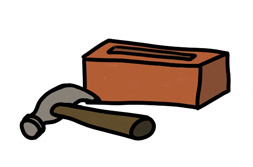 Hard materials are difficult to bend, squash or scratch.
They are used to make strong objects, such as:
- tools
- tables
- buildings
Metal and some rocks are hard materials.
Soft materials
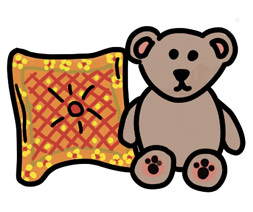 Soft materials can be squashed, pressed or twisted easily.
They are often used to make comfortable items, such as:
- cushions
- mattresses
- toys
Foam and fabric are soft materials.
See-through or not?
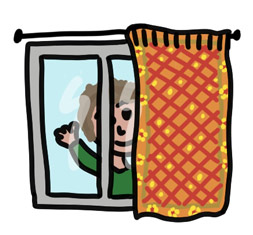 Transparent materials are see-through. You can see clearly through them. Glass is transparent and is used for:
- windows
- drinking glasses
Why do you think glass is good for drinking from?
Opaque materials are not see-through. You cannot see through them at all. Curtains are opaque so they can:
- block light
- give us privacy
Waterproof or not?
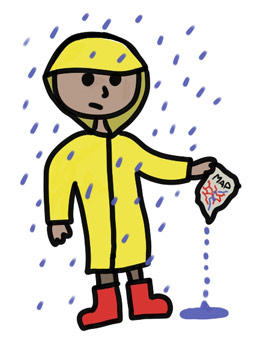 Some materials are waterproof, which means water cannot pass through them. Raincoats and umbrellas are waterproof to keep us dry.
Other materials are not waterproof. Paper and fabric soak up water and get wet easily.
Some materials dissolve in water. These are called soluble. Sugar is soluble because it disappears when mixed with water.
Some materials do not dissolve in water. These are called insoluble. Sand is insoluble because it stays the same in water.
What properties does it have?
- Look around at the objects in your room.
- Can you find an object that is hard?
- Can you find an object that is soft?
- Can you find an object that is waterproof?
- Can you find an object that is see-through?
 BBC Bitesize - How to identify materials
Learn how to identify materials and see if you can sort the materials in the sorting game.
Changing shapes
Some materials can change shape when we push, pull, twist or stretch them. This means they do not always stay the same shape.
Different materials change shape in different ways.
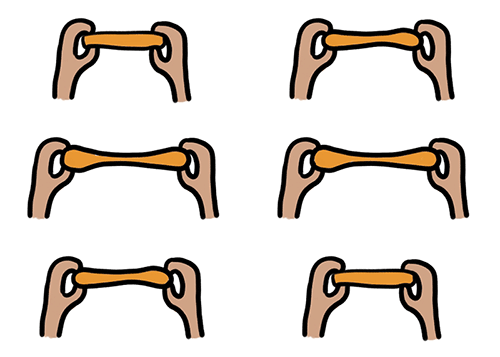 You can:
- Squash playdough by pressing it down
- Bend paper or cardboard
- Twist a cloth or towel
- Stretch an elastic or a rubber band
Some materials change shape easily, while others are very hard to change.
Do Materials Go Back to Their Shape?
Some materials can spring back to their original shape after being changed. Other materials stay in their new shape.
- A sponge can be squashed and will usually go back to its shape
- Playdough stays squashed and keeps its new shape
The squash test
- Squash a sponge and then let go.
- What happens when you let go?
- Does the sponge go back to its original shape?
- What happens if you squash it again?
- Try the same test with paper, cloth or playdough.

Also on Super Brainy Beans